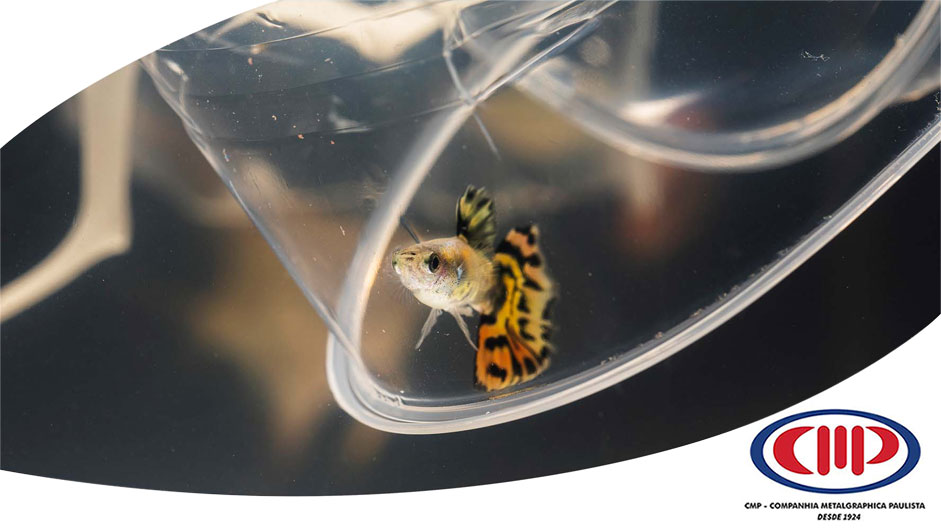
Humans have generated 8.3 billion metric tons of plastic since 1950. Only 9% of plastic waste is recycled and the vast majority ends up in landfills and in the environment, where it breaks down into microparticles that pollute water and air, harm the marine fauna and ultimately are ingested by humans.
THE IMPACT OF MICROPLASTICS
A weight equivalent to that of 80 million blue whales, 1 billion elephants or 25,000 Empire State Buildings. That's how much plastic has been generated by humans since they began large-scale production of synthetic materials in the early 1950s: 8.3 billion metric tons. A sufficient amount to cover Argentina. These are data from the Production, use and fate of all plastics ever made study carried out in 2017 by the University of California at Santa Barbara, University of Georgia and Sea Education Association.
Predictably, annual plastic production has multiplied over the years, rising from 2 million metric tons in 1950 to over 400 million in 2015. This trend does not seem to retreat: of all the plastic generated between these two dates by humans, half was produced in recent years. One of the main causes of the unstoppable increase in plastic production lies in the fact that it has a very short shelf life: half convert to waste after four years of use or less. While it is truly concerning that only 9% of this waste was recycled, while 12% was incinerated and 79% ended up in landfills and the environment.
Much of the plastic that ends up in the environment ends up in the seas and oceans. The water, the sun, the wind and microorganisms degrade the plastic discarded in the oceans until converting it into tiny particles of less than 0.5 centimeters, widely known as microplastics. Such particles are ingested by plankton, bivalves, fish and even whales, which mistake them for food. In 2016, a report by the United Nations Food Organization (FAO) reported on the presence of microplastics in up to 800 species of fish, crustaceans and molluscs.
According to researchers at John Hopkins University (USA), any European who consumes seafood on a regular basis ingests approximately 11,000 microplastics per year. But that's not all: at the end of 2018, a study by Greenpeace and the National University of Incheon (South Korea) also concluded that 90% of salt brands from samples worldwide contained microplastics. Furthermore, it is known that tap water is also one of the sources through which humans ingest small plastic particles.
Concerned about these findings, scientists began to study the effect of microplastics on the human body. The most frequently encountered plastics were polypropylene and polyethylene terephthalate (PET), both major components of plastic bottles and milk and juice packaging. However, the researchers acknowledged that they cannot determine the origin of each particle and indicate that, food is likely to be contaminated during the various steps of food processing or as a result of packaging.
So far, no evidence has been found to determine that microplastics pose a risk to human health. Especially in the case of large particles, like those found in the study. In contrast, small particles pose a greater risk as they can infiltrate the bloodstream, the lymphatic system and reach the liver.
Source: https://www.iberdrola.com/