According to the definition, consumer is any person, physical or legal, who purchases consumer goods. That is, any person (or organization) that has purchasing power fits the concept of consumer.
But not all consumers are the same.
They can be classified according to their purchasing power, the types of products and services they consume, age group, etc. But, one classification in particular is what interests us most in this article: the conscious consumer.
A person can simply buy and dispose of waste anyway, without worrying about their role in maintaining the environment, or they can understand that each of their actions has an impact on the environment.
WHY IS IT IMPORTANT TO CONSUME CONSCIOUSLY?
To begin with, because it helps humanity get closer to sustainability goals. With the climate crisis knocking on our doors, conscious consumption can curb the negative effects of solid waste and pollution.
It also minimizes the need for mass consumption and production, which is one of the main problems behind the degradation of the environment.
Furthermore, it is imperative from an ethical point of view. The emphasis on conscious consumption revolves around the fact that we all have a role to play in the impact of our actions on society and the environment.
And since buying things is inevitable in our modern lives, we can at least do our best to make sure it doesn't pose a problem for our futures and our children's futures.
THE BENEFITS OF CONSUMING CONSCIOUSLY
As individuals, it can be difficult for us to see the benefits of mindful consumption. Does it make so much difference to buy a product that has a packaging made with material that is easy to recycle or with recyclable materials?
Here, the logic that the collective is composed of a series of individual actions is valid. If each person does their part, big changes can happen.
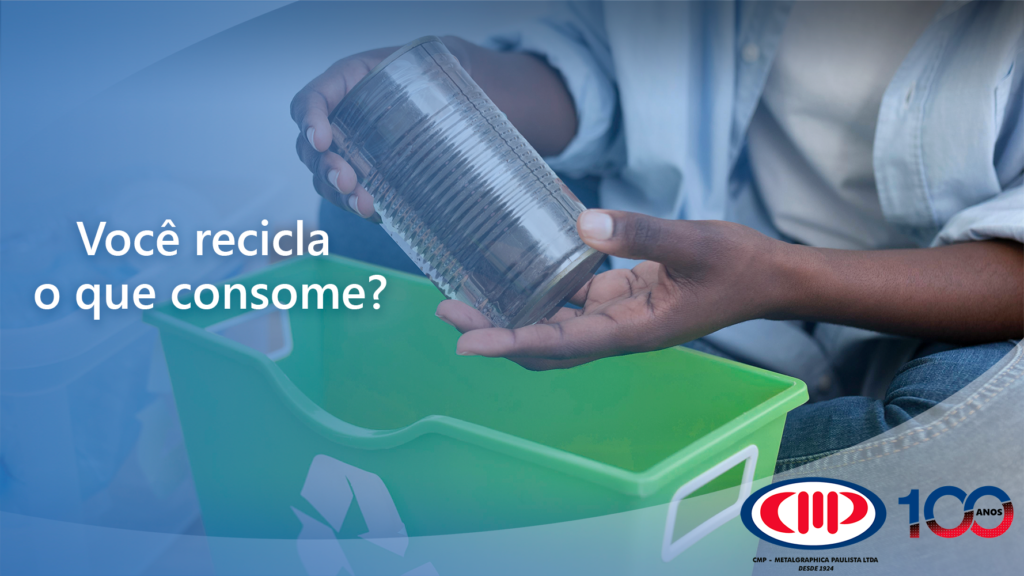
For example, the same logic applies to harmful behavior like taking out the trash in the right place. Someone can throw a can that could perfectly well be recycled into the regular trash or send it to selective collection.
Imagine if everyone did the right thing!
When we consume and act in accordance with good environmental practices, we even force companies to act in the same direction.
Want one proof of that? In 2011, only 20% of companies listed on the S&P disclosed environmental reports. In 2020, the percentage increased to 90%.
These changes come exactly from the pressure that consumers exert on society. In other words: we have the power in our hands, but we have to exercise it correctly.
BEING AWARE GOES BEYOND THE TIME OF PURCHASE
The consumption journey also needs to include what we do when a product is no longer useful to us.
We speak of the example of the can, which can be thrown in the wrong place or in the right place.
Where do you throw your consumed packaging?
Just so you have a better idea of the amounts of waste that Brazil produces annually, we are already at the 80 million tons. Even worse: 60% ends up in landfills (in Germany, this index is 1%!).
turns out that 30% what ends up in landfills could be recycled. The number may not have that much impact, looking at it from afar, but imagine a cut of 30% in your monthly budget and you will quickly see that yes, it is a really important difference.
And it starts with actions so simple and commonplace, it's surprising they aren't practiced more often.
For example, have you finished the contents of a package (made of steel, plastic, paper, aluminum or any other recyclable material)? Just sanitize it to remove waste and store them in a separate place.
When your box (bag, bucket, or whatever) of used cans is full, you can either place it in the appropriate container at your condo, or go to a PEV (voluntary delivery point).
It's not that much work. In fact, it is much less work and energy spent than what is spent if you do not dispose of these materials correctly. Imagine that every volume of garbage has to be transported from its place to distribution centers and from there to landfills, and that costs a lot of money, not to mention the environmental impact of losing the material.
We could go on talking for much longer about possible actions you can take to help the environment, but today's message is already given: send the packaging you consume for recycling!
And, in addition, also take a look at our other blog content, you will find a lot of useful information that can be applied in everyday life.
And as information is power, the more you know, the better you will be able to make the right decision, influence your friends and continue to put pressure on companies so that this effort is not just that of some sectors of our society.
Source: Prolata