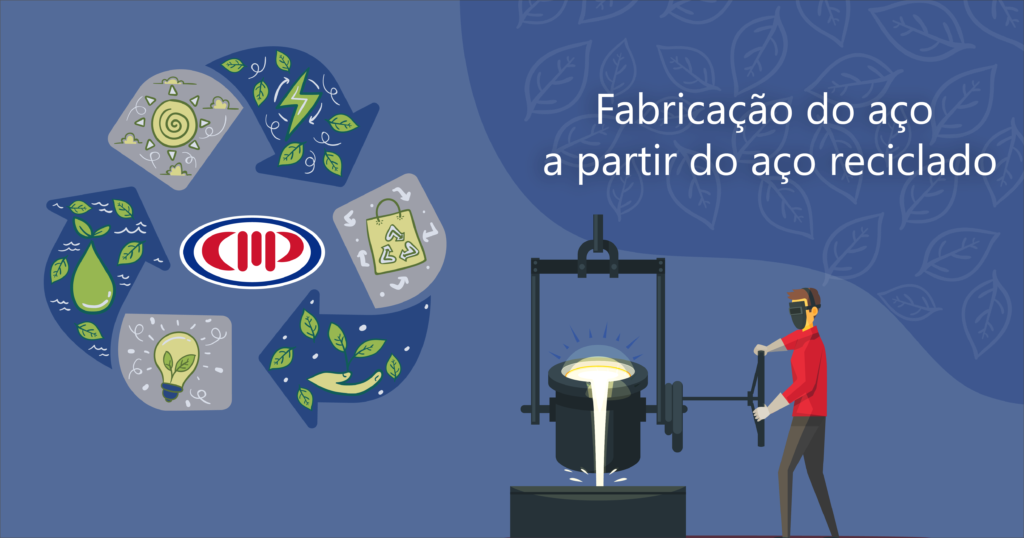
According to the President of the National Institute of Ferrous Scrap Companies (Inesfa), Marcos Fonseca, most of the metals contained in scrap metal are already in metallic form, requiring a small amount of energy to manufacture steel, unlike primary production, which is very more intensive. The scrap recycling process, an input that accounts for around 30% of steel production in Brazil, reduces energy consumption by steel mills by around 64% compared to the use of other raw materials, such as iron ore, per example, says Fonseca. The companies are responsible for 47% of all scrap prepared in Brazil. Each ton of recycled material saves 1,140 kg of iron ore and 154 kg of coal, says Fonseca. The same goes for water. Most of the water used in the plants for the recycling process goes through closed cooling systems, being recirculated and, consequently, reused, according to a study by Inesfa.
Source: Ibram