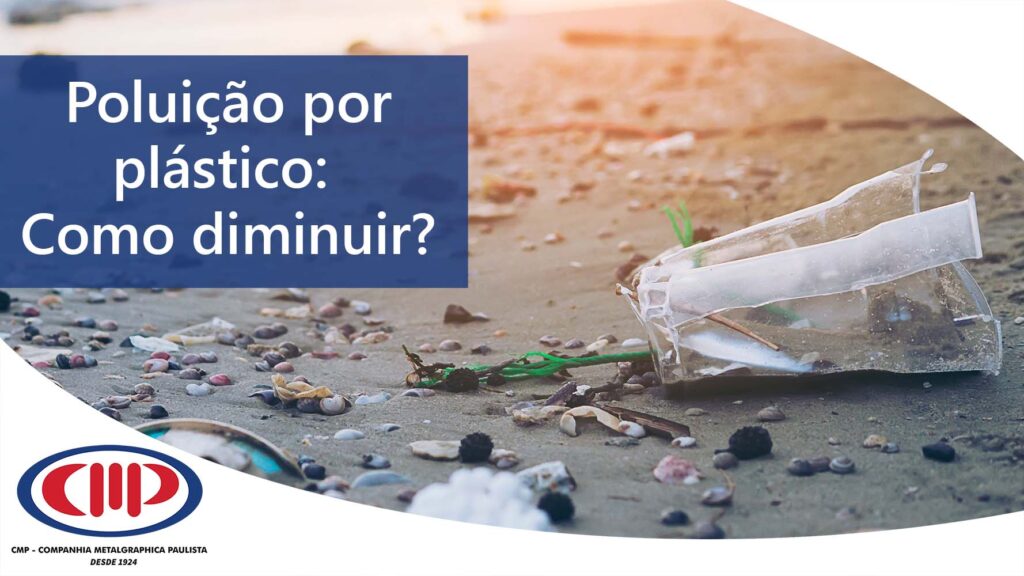
It is not new that the excess of waste and plastic packaging is the subject of discussions about the negative impacts on the environment. Recently, at the 5th Session of the United Nations Environment Assembly, this was one of the main agendas. At the event, the countries discussed a new global agreement that aims to reduce plastic pollution, especially in the seas. The agreement already has the support of a large part of the United States, members of the UN and several companies.
Parallel to the assembly, surveys carried out by Ipec (Intelligence in Research and Consulting) in 2021 at the request of the non-governmental and non-profit organization Oceana, showed that the vast majority of Brazilians consider plastic waste problematic for the environment. Of those who responded, 92% expressed concern about these residues.
As a solution to this reality, the Brazilian Association of Steel Packaging (Abeaço) and Prolata consider it important to adopt measures that contribute to a more sustainable scenario to avoid the degradation of the planet. Check it out below:
Reverse logistics: making the reverse logistics system increasingly viable, which aims to reuse discarded materials, is essential to reduce the accumulation of solid waste and the correct destination of materials used for recycling.
To strengthen this system, Prolata entered into a partnership with Sincomavi (Union of Retail Trade in Construction Material, Machinery, Hardware, Paint, Crockery and Glass of Greater São Paulo) with the aim of ensuring the correct disposal and appreciation of cans. of steel used to condition building materials, paints and others sold by the entity's 15,000 associates who work in this retail segment.
Another example of how the associations have been working is the “Paintou, Sobrou, Levou” campaign, in which consumers in São Paulo will be able to discard leftovers and packaging of paint that can no longer be used, in addition to accessories used in painting, at selected points of the main construction retail chains in the city.
Sustainable packaging: seeking new packaging alternatives is another way to minimize the accumulation of waste on the planet. Steel and aluminum, for example, are 100% recyclable and can be reused countless times without losing the original characteristics of the materials.
Materials that take longer to decompose and are left in inappropriate areas can contaminate water and marine species.
Accessible selective disposal for consumers: the Brazilian Association of Steel Packaging (Abeaço) and Prolata aim to allow post-consumer steel cans to be correctly disposed of by consumers and revalued in steel mills. Throughout Brazil, Prolata has partnerships with 63 cooperatives, 33 warehouses, in addition to 173 Receiving Points.
Replacement of plastic packaging: replacing or making plastic recycling viable is essential to alleviate the problem. However, many people may confuse recycling with reuse. Recycling is disposing of packaging correctly, so that it is revalued. Improper reuse must be avoided, such as using plastic paint cans to store water or food, a popular practice in the Northeast.
A study carried out by the Center for Packaging Technology of the State of São Paulo (CETEA), at the request of Abeaço, tested the migration of toxic agents to food and beverages packaged in two types of packaging: plastic buckets and steel cans. In both cases, the packages had been used to contain water-based paints, without petroleum-derived solvents. The study detected the migration of elements, mostly in plastic buckets, such as phthalates, in addition to tercbutane, cyclohexane, toluene, ethylbenzene and xylene, and some of these substances are related to serious diseases.
In plastic buckets, the situation is more delicate, since the buckets for marketing food are very similar to those used for paint and the labeling can be easily removed, which prevents consumers from knowing what type of material the packaging previously contained.