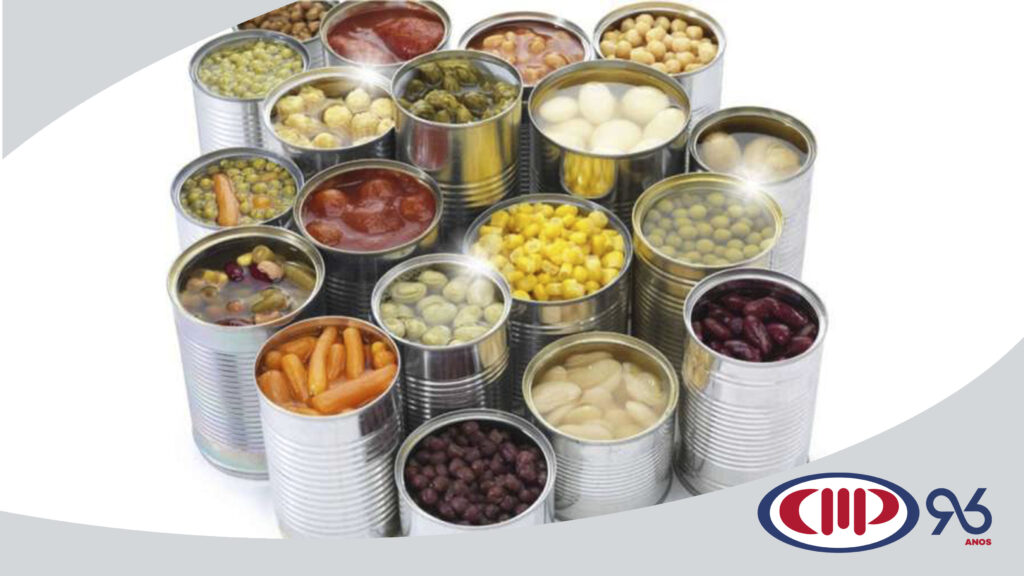
Steel packaging is the best option for oil filling.
True. Research by Unicamp proved that steel cans are the best packaging option for preserving olive oil and its nutritional properties. Unlike other transparent packages, the steel can does not allow the incidence of light and oxygen and prevents oxidation of the product, preserving the flavor and properties for a longer time.
2 – Canned foods are not harmful to health.
True. Foods packaged in steel cans are not only healthy but, in some cases, have more nutritional value than their in natura version. The can naturally preserves the flavor and all the nutritional properties of the food, without the need for preservatives or chemical additives. In addition, its manufacturing process destroys microorganisms and eliminates pesticide residues in 99%.
3 – The products are protected in the steel can.
True. The steel can prevents contact with light and oxygen, factors that deteriorate the properties of food, accelerating chemical reactions and altering, for example, its flavor, color and consistency.
4 – A dented can compromises the quality of food.
Lie. Even if the can is dented, there is no problem consuming the food, as the packages are coated with a protective film that resists deformation. “However, we should not consume perforated or stuffed cans, as this indicates inadequate chemical reactions for consumption”, emphasizes Thais.
5 – Rusty cans can cause tetanus.
It depends. Rust is part of the natural process of steel degradation and, by itself, is not harmful to health. Tetanus is a disease caused by a microorganism that can be found on many surfaces, especially the soil. That is, any material that is contaminated with this microorganism can cause tetanus or any other disease.
6 – Tinned tomatoes have more lycopene than raw tomatoes.
True. Canned tomatoes have three times more lycopene than traditional ones, due to their cooking process inside the can itself. Studies prove that our organism absorbs lycopene better when exposed to cooking, that is, the heat increases the bioavailability of the substance, making it more present than in fresh tomatoes.
7 – Corn cooked at home is less caloric than canned corn.
Lie. Canned corn is 40% less caloric than home-cooked corn.
8 – Canned foods are economical.
True. Canned foods offer better cost-effectiveness, are tasty, nutritious and remain preserved for longer, avoiding waste. Also, with canned food you don't waste energy to store food, as they don't need refrigeration.
9 – Canned Feijoada has more calories than the traditional one.
Lie. Feijoada in a can is 30% less caloric than the traditional one.
10 – Canned food does not cause botulism.
True. Botulism is not related to packaging. It is a rare but potentially fatal form of food poisoning caused by a toxin produced by the bacterium Clostridium botulinum present in soil and in contaminated and poorly preserved food.
Source: Tribuna do Norte – Blogs – 09/29/2020